

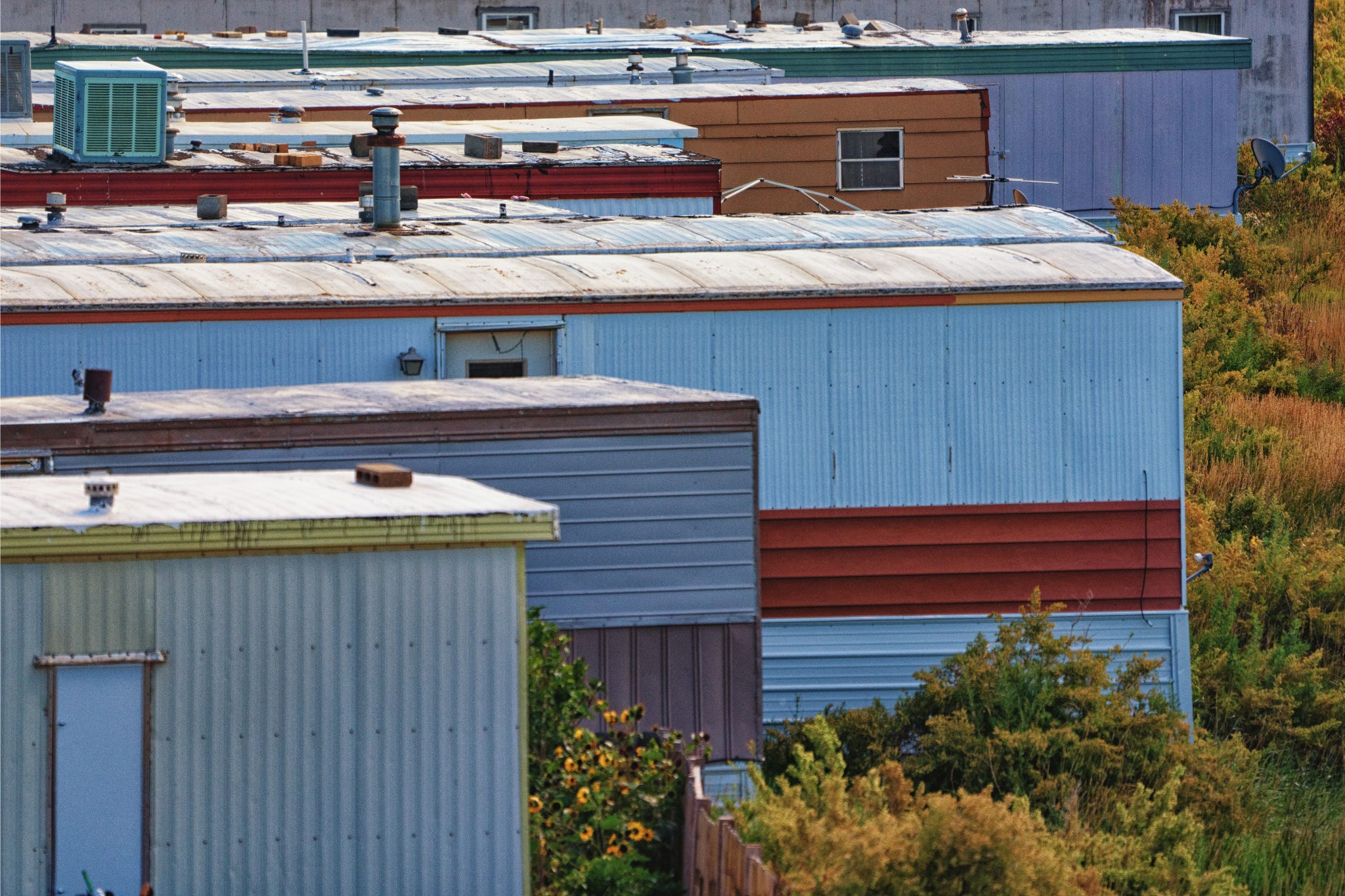
Laramie City Councilors signaled their interest in revamping the city’s mobile home park regulations during a work session Tuesday.
The council is likely to scale back some siting regulations that hinder the placement of manufactured homes, especially in West Laramie, following testimony from several park owners.
Councilors could further examine fire risk in the parks, rules surrounding RVs and rentals, and the utility fees that parks have started charging on top of lot rent. But Mayor Sharon Cumbie said the council would be hesitant to institute changes that drive up residents’ monthly bills.
“I think we have identified some definite issues that we need to look at,” the mayor said. “I think the last thing we want to do is to impose such stringent standards that it escalates the cost to the residents of these communities, so we are very mindful of that.”
It’s still unclear if or how the council will tackle the issue of affordability directly. That’s a thorny problem for a government body to address but one that is plaguing Laramie’s mobile home park residents. In addition to rising lot rents, park residents are also sometimes imperiled by dilapidated water or street infrastructure within their park.
Rep. Karlee Provenza (D–Laramie) appeared via Zoom to say she’d like to keep working with city leaders on that front.
“There’s a lot that’s out of your jurisdiction as city council members,” she said. “As you move forward in trying to figure out what we do with mobile home parks, please consider me your partner in that, in terms of what needs to be done from a state standpoint to protect the people that live in the parks.”
The work session Tuesday was called to consider the current status of mobile and manufactured homes in Laramie and to lay the groundwork for future city action. No votes were taken, but city staff will likely return in the near future with concrete proposals for the council to amend, approve or deny.
Below are some of the key takeaways from this week’s meeting.
The mobile home landscape in Laramie
Mobile or manufactured homes are a crucial component of the city’s overall housing stock.
“Nationally, manufactured houses are often described as the largest unsubsidized sources of affordable housing in the nation,” City Planner Joseph Shahidi told councilors. “It’s no different here.”
These homes account for about 5.6% of all housing units in Albany County, which is significantly less than the state at large (11.5%) but close to the national average (5.4%).
There are 19 manufactured home communities across Laramie, including 13 in West Laramie. They range in size from four to 230 lots and are collectively home to an estimated 866 housing units. That figure does not include parks outside city limits.
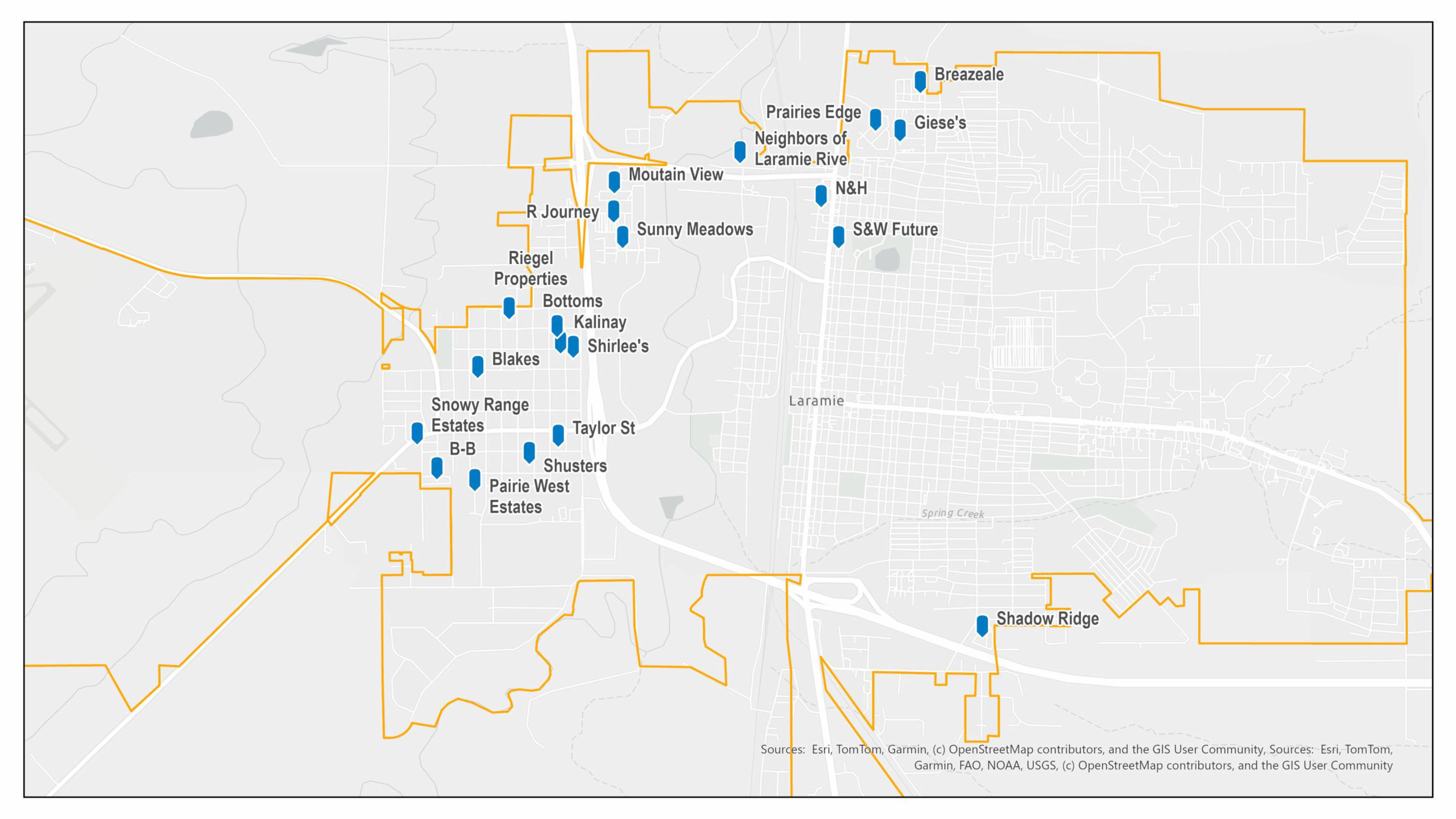
Shahidi said most of the city’s parks have been operating for decades.
“We’ve only seen really a handful sprout up in the last 20 years,” he said. “So they’re not a booming sector of the housing stock here. We’re not seeing a lot of new lots being built, but we do have a fairly stable amount.”
The overall condition of these parks has degraded over time, Shahidi added.
“We’re seeing aging infrastructure, which includes things like private streets and utilities,” he said. “These parks aren’t immune to the curse of time. And so, if we haven’t seen improvements, sometimes that can lead to catastrophic failure of systems that are not city-operated or city-maintained, but privately maintained.”
Current regulations
Manufactured home parks are currently governed by Laramie Municipal Code Title 8.68 (which outlines the licensing and renewal process) and the Unified Development Code Title 15.14 (which outlines design standards like landscaping, street access and parking, safety measures and more).
Each park is inspected for compliance every two years, according to the presentation.
“This inspection includes the planning department, code enforcement, and fire prevention staff,” Shahidi said. “Things that we’re looking for are things like site numbers and internal street signage, fire and life safety conditions, general property maintenance, nuisances … and then use and occupancy of individual sites.”
Inspectors examine fire risk, junk accumulation, and the ratio of RVs to permanent structures, among other factors.
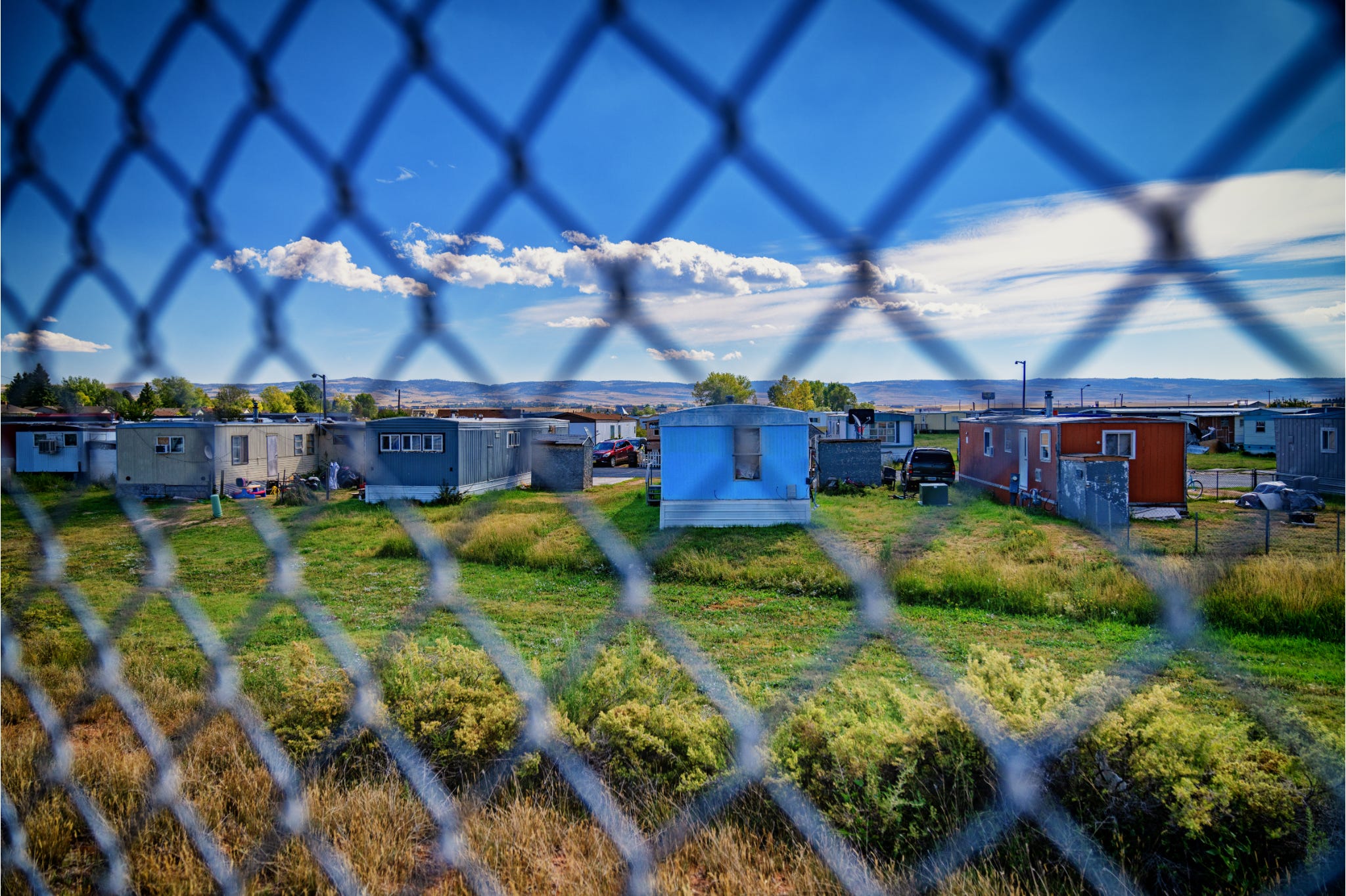
But unlike Laramie apartments, manufactured homes do not fall under specific habitability requirements.
“A lot of times we’re looking at just the community itself and not necessarily the units,” Shahidi said. “We don’t have a habitability standard for each of the units, and so we’re not specifically looking [at] or inspecting each person’s home.”
In what came as a surprise to some councilors and even some park owners — and which will likely surprise renters across town — Shahidi said the city code technically prohibits mobile homes from being used as rentals.
“A manufactured home must be owner-occupied and not rented out,” he said. “Per code, we’re supposed to see owner-occupied and owner-occupied only units within parks, but we are seeing some that are being rented out as investment properties.”
Pain points for both owners and residents
The possibility of mobile home park reform is complicated by the fact that not everyone is seeking the same kind of reform.
The issues facing park owners are distinct from the issues facing the people who actually live in the parks, and both of these are distinct from the aesthetic complaints outsiders have about parks they neither own nor inhabit.
“It’s almost twofold to me,” Councilor Jim Fried said. “It’s the people that own individual or rent individual properties within [the park], and then the people that own the parks themselves. And how are we ensuring that we’re protecting both of these factions of folks in our community and providing resources?”

The presence of distinct problems does not mean the mobile home game is a zero-sum contest between owners, residents and outsiders. Some solutions might benefit all parties.
For example, anything that lets park owners keep lot rents down — so long as it doesn’t come at the cost of resident health or safety — could be a boon to the park residents stuck paying that lot rent.
But there are real tradeoffs, as well. The presence of competing interests means some actions will advantage specific parties at the cost of others.
In 2022, for example, the out-of-state owners of a local Laramie park instituted “beautification standards” to make the homes look nicer. But those aesthetic requirements were essentially unfunded mandates that placed a financial burden on residents to repaint their walls approved colors, remove fences and more — all to complete a project that would raise the value of the park. In turn, that boosted value could allow the park’s owners to raise lot rents, further burdening the residents.
Several councilors have been clear that they do not intend to pursue aesthetic requirements, but Fried floated the idea of providing support for parks and neighborhoods that do wish to upgrade.
“[I want to] see if we can continue to find solutions and maybe create a fund within our city to tackle some of these issues for low-income housing or mobile parks specifically,” he said. “The city can then maybe partner with some of these parks. If they’ve already done infrastructure upgrades or they want to do that, how can we work with them? Because some of these people need that from us.”
The problems facing park owners
For park owners, the most frequently cited pain point was that of overregulation. While some took aim at a broader range of regulations, most owners focused on the specific issue of “setbacks,” or the mandatory distance between homes and public right-of-ways.
“We have old communities that are somewhat limited in what they can do,” Shahidi told the councilors. “We have fairly industry-normal setback standards, but in communities that are right there next to streets, it’s hard to accommodate these.”
Councilor Erin O’Doherty asked if the setback requirements for parks were different than for other residential zones. Shahidi said they were.
“This section of code is specific to this use and has different standards compared to any other zoning district, partially because of the intensity of use,” Shahidi said. “These communities are often higher intensities — more people on less acres than we would see on a normal residential zoning district. And that’s partially why we require things like setbacks.”
But he added some of those requirements are substantial.
“For example, there’s a 40-foot setback from a public right-of-way,” Shahidi said. “That’s not the street. That is the entire right-of-way — curb, gutter, sidewalk. Sometimes that means … it can be fairly far back.”
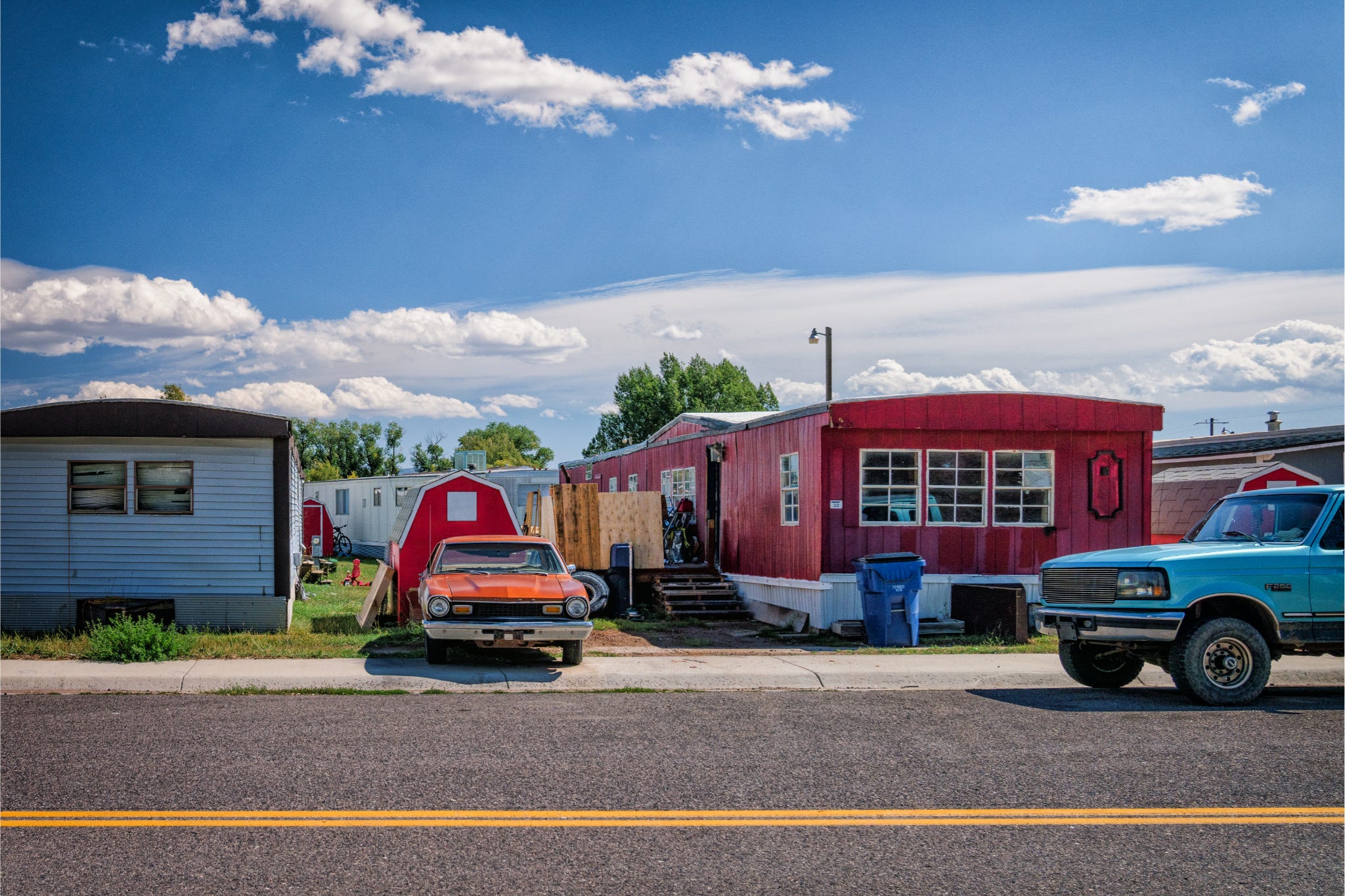
In West Laramie parks, this rule has kept older trailers from being replaced.
If a home in such a park predates West Laramie’s annexation into Laramie in the 1960s — as some do — it is considered “grandfathered” into the older standard. The homes within the park are allowed to be a shorter distance from a public right-of-way than the newer code would allow.
But if a park wants to add a new unit, it must follow the new setback guidelines. And if a resident wants to replace their unit with a new manufactured home, they would have to conform to the setback requirements as well.
Sometimes, that’s not possible in the space available.
Marge Bottom, whose family owns Bottoms Mobile Home Park, testified that this has stopped at least one of her residents from swapping out her 1960s trailer for a newer, more modern home.
“If we really want to upgrade these mobile home parks and upgrade the housing, we can’t tie the mobile home park owners’ hands,” Bottom said. “Forty feet from the city right-of-way — I mean, the lots aren’t that big … and that’s how our mobile home park was built. It was built 60 years ago. And at that time, we were in the county, and we met all the requirements.”
The city council directed staff to draft up a change to these setback requirements, but how radically those requirements are altered and whether they will address parks citywide or just those in the unique situation facing West Laramie, remains to be seen.
“We want to maintain public safety, but we also want to be reasonable about setbacks and to revisit [those rules],” Cumbie said. “Some of these have been in place for 40-50 years, and so we need to ask ourselves: Is this really necessary? And we plan to look at that.”
The problems facing park residents
By far, the top issue making life difficult for park residents is rising lot rent.
Average lot rent is about $574 a month, according to Shahidi’s presentation, which drew from state statistics. According to that same source, this is only a modest increase from the year before.
But earlier state reports show average lot rent in Albany County has increased by 40% in the last five years for which data is available, up from $410 just before the pandemic.
Either figure obscures the true cost hikes facing park residents.
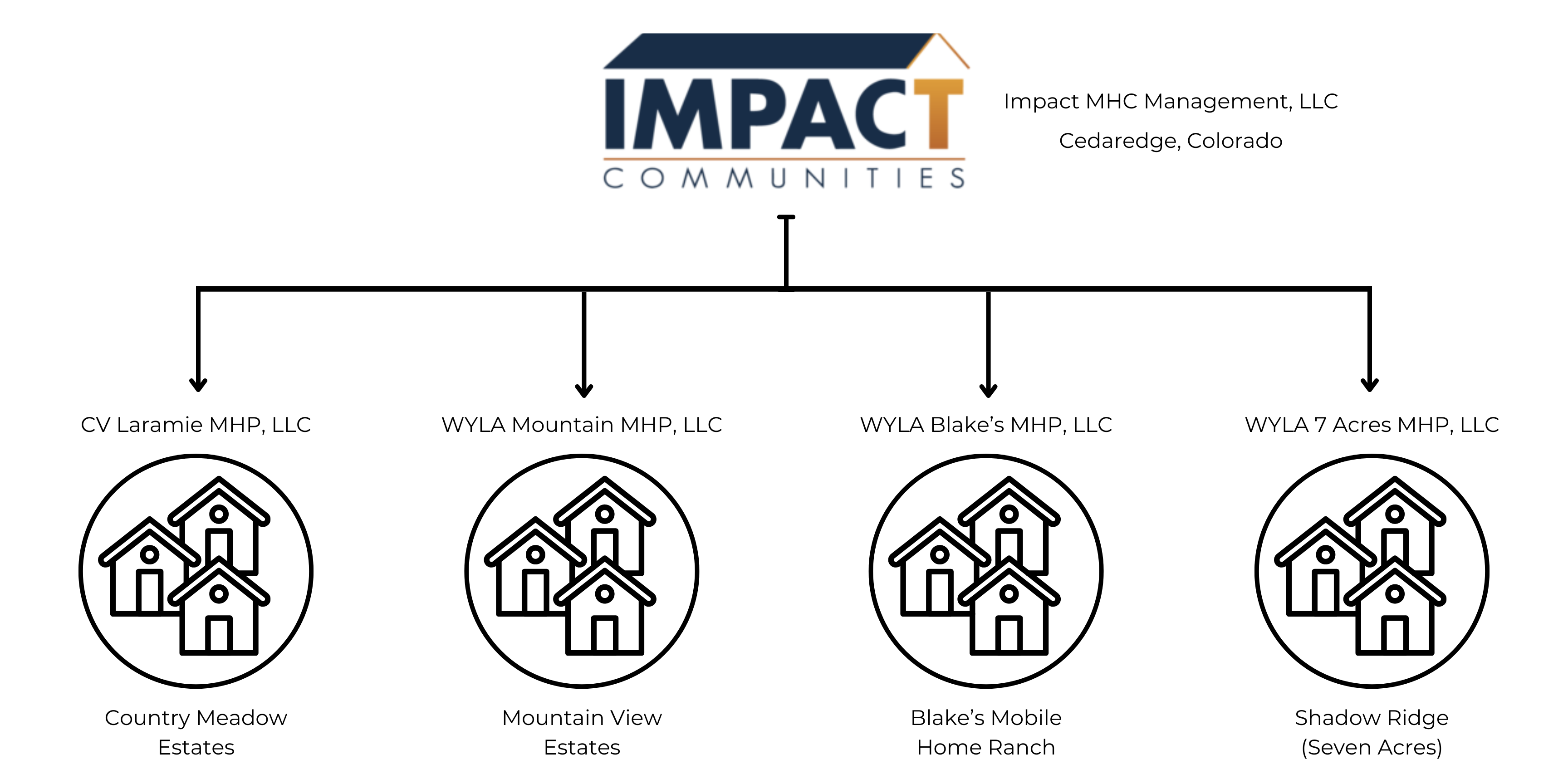
In many Laramie parks, including those owned by Impact Communities, lot rent increases have exceeded this average growth. For hundreds of local families, lot rent has skyrocketed in the last few years — sometimes by as much as 100%.

“Lot rent” as a measure also often does not include utility fees.
In parks owned by Impact, for example, these fees used to be included in the lot rent. They have since been pulled out and are now charged as separate, additional fees. That means the actual monthly bill faced by the average park family has likely increased by more than 40% in the last five years, as both rent and fees rise.
The council did not hear directly from park residents Tuesday, though some were in attendance. During her own public comment, Rep. Provenza said many of the park residents she has talked to fear retaliation for speaking out against their corporate landlord.
“Many of those folks did not want to speak tonight, just out of fear, of concern about what their public comment might mean for their living situation,” she said.
City leaders are aware of the ownership changes and rent hikes.
“There was a time in Laramie when most of these parks were owned by people who lived in Laramie,” Shahidi said. “Sometimes, those people continued to own them when they moved away, and sometimes they are sold to corporations. Post-pandemic, manufactured home parks were a very hot commodity for purchasing in the housing market.”
In some Laramie parks, residents now find themselves at the whims of new out-of-state owners driven by the explicit belief that mobile home ownership is a “game” where winning requires that “the rents must go up.”
Higher rents have meant hardships for young families and single older people alike, and dozens were driven from their homes in the wake of Impact’s takeover.

As with many facets of the housing crisis, Shahidi said Laramie is experiencing a squeeze being felt across the nation.
“Most of all, we continue to worry about resident vulnerability and displacement risk,” he said. “This is not unique to Laramie. This is across the board with manufactured home communities, and we continue to have to think about it related to everything that we do.”
This story was made possible by The Laramie Reporter’s generous Housing Solutions Reporting Sponsors. The Reporter maintains complete editorial independence. You can read more about the sponsorship on our about page.
The City of Laramie shouldn't try to increase regulation. If it does so - as power-hungry city bureaucrats always want it to do - mobile home parks within the city limits will shut down. The out-of-state entities will sell their land - which has now increased greatly in value - at a profit and drive mobile home residents out to the county beyond the reach of city regulation. What's more, enforcement of any city regulation will cost the city money, whereas state regulations will be enforced by state courts and with state funds. As with apartment rentals, any regulation of the business practices of mobile home parks is best done statewide.
I fear for the locals living under corporate ownership, and what those lot rents mean for those living on social security in these parks. It certainly doesn't give me any faith that the corporations would make needed improvements or provide for safety or incentives.
As long as those original homes in West Laramie aren't a fire hazard, why not let people replace using the grandfathered setbacks? Especially at Blake's, where you're right next to the elementary school, that park in particular needs to maintain safety and quality.