
Lawmakers question Freedom Caucus’ proposed UW budget cuts
We’re “trying to get their attention,” Rep. John Bear said in defense of his committee’s $40 million cut to UW’s standard budget.

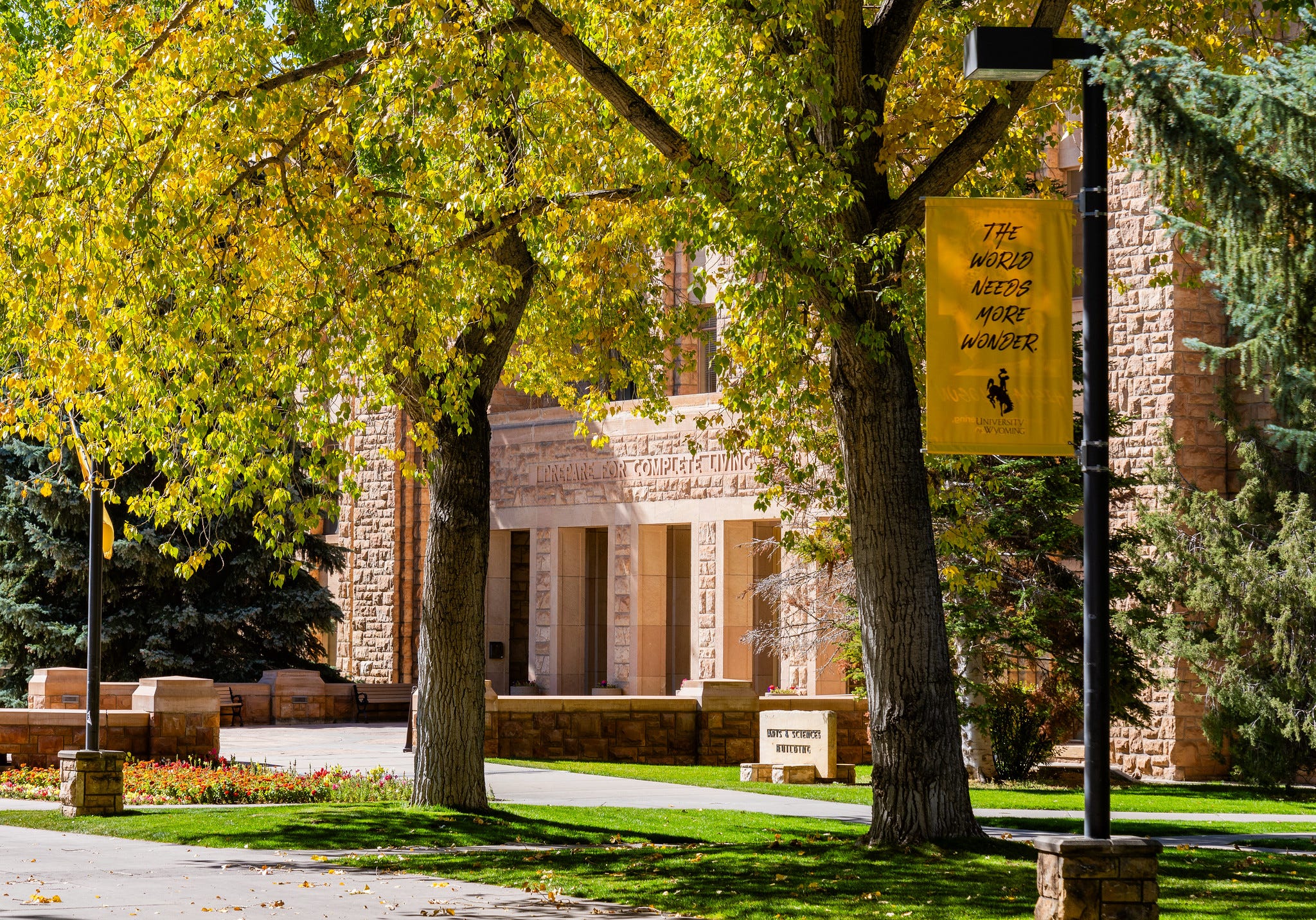
Nearing the end of an eventful first week at the State Capitol, lawmakers are beginning to tackle their primary reason for gathering this year: deciding how the state will fund its various agencies — including the University of Wyoming — for the next two years.
Both the House and the Senate considered UW’s portion of the state budget during Thursday floor sessions.
The amendment process — when lawmakers inevitably bring motions to cut the university’s funding further or to restore the cuts already proposed — begins next week.
But on Thursday, lawmakers had questions for leaders of the right-wing faction now trying to decimate UW’s block grant, defund Wyoming Public Media, reject athletics increases and deny private fundraising support.
Those right-wing appropriators defended their choices Thursday.
Sheridan Rep. Ken Pendergraft (HD-29) said the motion he brought to rip $40 million out of UW’s standard budget — a cut that could lead to 160 layoffs across campus — was meant to refocus the public university on agriculture, engineering, teacher training and the other areas Freedom Caucus lawmakers value, “rather than training people in majors, minors, ideas and concepts where they’re not going to be, frankly, at home in Wyoming.”
Gillette Rep. John Bear (HD-31) put an even finer point on it, fielding questions from Cheyenne Rep. Rob Geringer (HD-42) about how Bear, Pendergraft and others landed on $40 million as a number.
“We determined based on things that this body has done over the last four years and the kind of reaction we’re getting from the university, and frankly, looking at spending money elsewhere,” Bear said. “This was a cut that we felt the university could handle.”
Geringer pressed for more.
“I guess I’m trying to understand how you arrived at that $40 million number, just to get to that point?” he asked.
“That was just because we hadn’t gotten their attention with some of the other things that we’ve done in the past,” Bear replied. “So trying to get their attention.”
Across the hall in the Senate, lawmakers had similar questions, also raising concerns about “picking winners and losers” when it came to funding for sports and matching grants.

The budget crafting process started long before the session. UW decided what it would ask for this winter in August. Gov. Mark Gordon released his recommendations in November, scaling back UW’s initial requests, but honoring most of them, and advocating for inflationary pay bumps for all state employees, including those who work at UW.
Then the powerful Joint Appropriations Committee took a crack. Dominated by members of the right-wing Freedom Caucus, the committee took aim at the university curriculum it disapproves of, mocking course listings during a legislative hearing, then crafting a budget bill that, in addition to gutting $40 million in a blanket cut across campus, slashes $21 million in other cuts and rejections, including the total defunding of Wyoming Public Media’s state support.
The caucus also rejected the governor’s recommendation to raise state employee salaries from 2022 to 2024 pay tables.
On Thursday, for the first time, the committee’s budget bill was presented to the full Senate while an identical version was heard in the House. No amendments could be brought on this first of three readings, but non-Freedom Caucus Republicans and Democrats had questions.
What did the House say?
The House’s discussion about UW’s budget took place late on Thursday evening and focused almost exclusively on the $40 million cut and how lawmakers could justify it.
Several, including Lander Rep. Lloyd Larsen (HD-54) and Rock Springs Rep. Cody Wiley (HD-39) objected to the “retaliatory” nature of the decision, pointing to Bear’s comments about “getting their attention.”
Bear defended his stance by pointing to the Morrill Act, one of the key pieces of federal legislation that provided for UW and other state universities, and established their initial mandate.
“There is an element of trying to get the university to reflect the state of Wyoming more,” he said. “We’re living in an age where the universities across the nation are going further and further away from what a land-grant university is really designed to do. That land-grant university, if you look at the Morrill Act, talks about a practical education, so we’d like to see the university head back towards a more practical education.”
Bear pointed to DEI programs — which the legislature banned and the university cut but which Bear claims have not yet been “rectified” — as an example of what the Freedom Caucus is trying to stop.
During budget hearings earlier this year and in op-eds penned since, Bear and others have pointed to an ecofeminism course and other environmental or gender studies courses that UW offers (or, in the case, of ecofeminism specifically, courses once offered years ago) as examples of curriculum that does not reflect Wyoming.
Some lawmakers questioned whether a blanket cut rather than a targeted cut would even achieve the goal of eliminating the allegedly “woke” offerings.
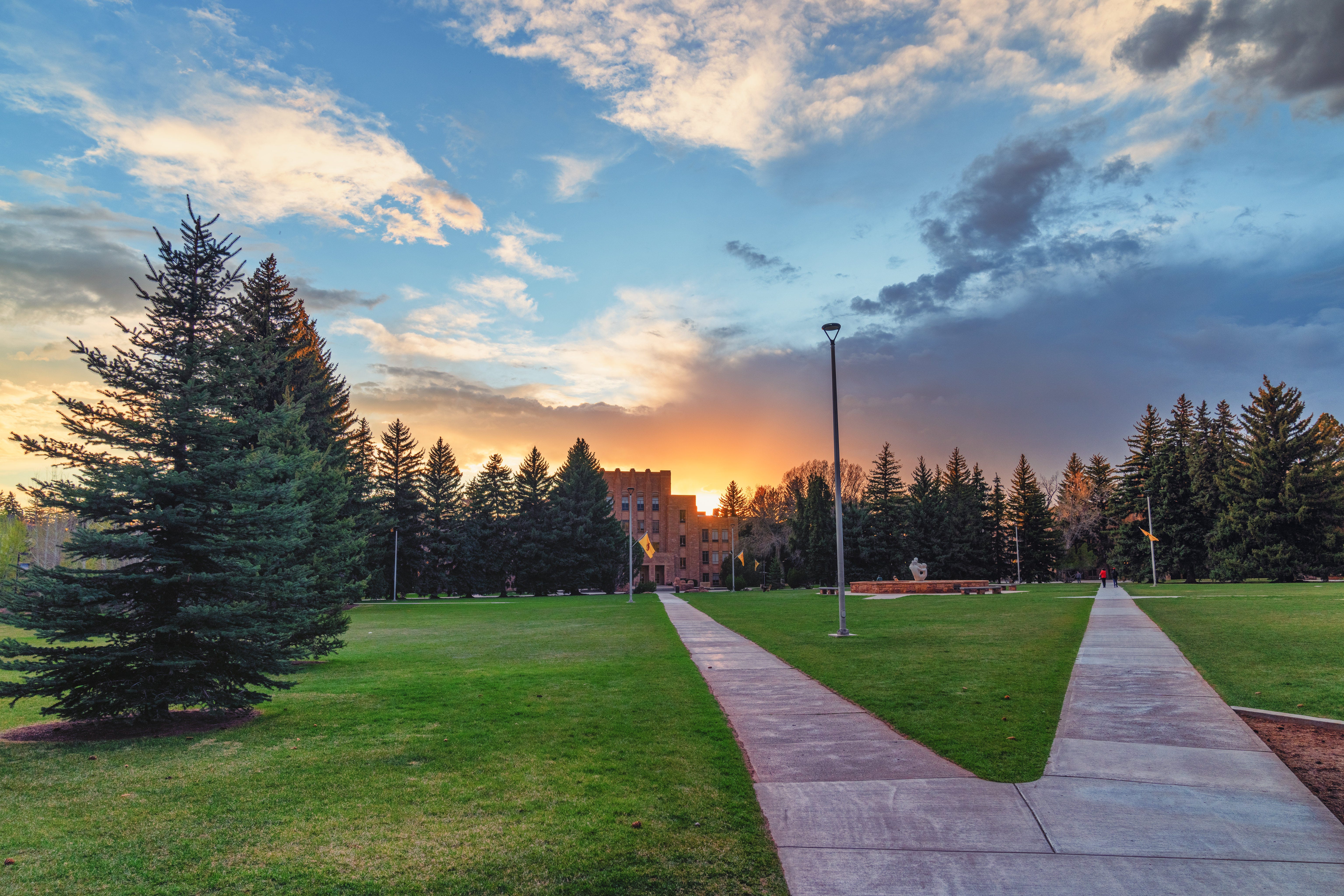
“There are some topics that you guys think that the university shouldn’t teach, so we’re punishing every single student in the university for it?” Jackson Rep. Mike Yin (HD-16) said. “They’re going to increase tuitions. They’re going to have to make up the money somehow. Is that the right way to — quote, unquote — punish the university for teaching something that you don’t like?”
Cheyenne Rep. Lee Filer (HD-44) said slashing programs the legislature doesn’t approve of, but which students are choosing to take, is short-sighted.
“Our state has the largest group of young folks leaving than any other state in the nation,” he said. “Here we are telling them, ‘Hey, we’re just gonna cut that wonderful university.’”
Filer added this sends a “bad message” to the state’s young people and will drive them to Colorado or other states with more well-rounded universities:
I got six kids. They got a lot of friends. And you know, when I talk to them, I always ask them, I’m like, ‘Where do you guys want to go to school?’ And they say, ‘The University of Wyoming.’ And it wasn’t just to study ag. It was to study multiple different things. They all have different ideas. They all have different likes. They all have different career paths that they might want to pursue. And here we are telling them we’re going to cut the university funding for a bunch of different programs. And then somewhere in a footnote, we’re going to tell you which programs we don’t want you to mess with at the university, because we, in this body, know better than the people we’re going to leave this state to.
What did the Senate say?
Senators asked a broader range of questions during their own initial reading of UW’s budget, questioning choices to boost rodeo funding but reject a $6 million request for athletics, decisions to award fundraising support for the School of Energy Resources but not the university as a whole, and calls to give a $4.5 million critical minerals research request a 10% haircut.
All of these are included in the budget bill crafted by the Joint Appropriations Committee.
Albany County Sen. Gary Crum (SD-10) asked several questions, including about the $40 million cut and the decision to protect several individual programs and colleges from that cut, while leaving all other university divisions at its mercy.
“By doing it this way, we cut the $40 million, we kept those others whole, but that means all the others are going to lose, not just their proportionate share of $40 million, they’re going to lose a lot more,” Crum said. “So I wonder why we picked winners and losers, and how come we’re penalizing some of those … other colleges.”
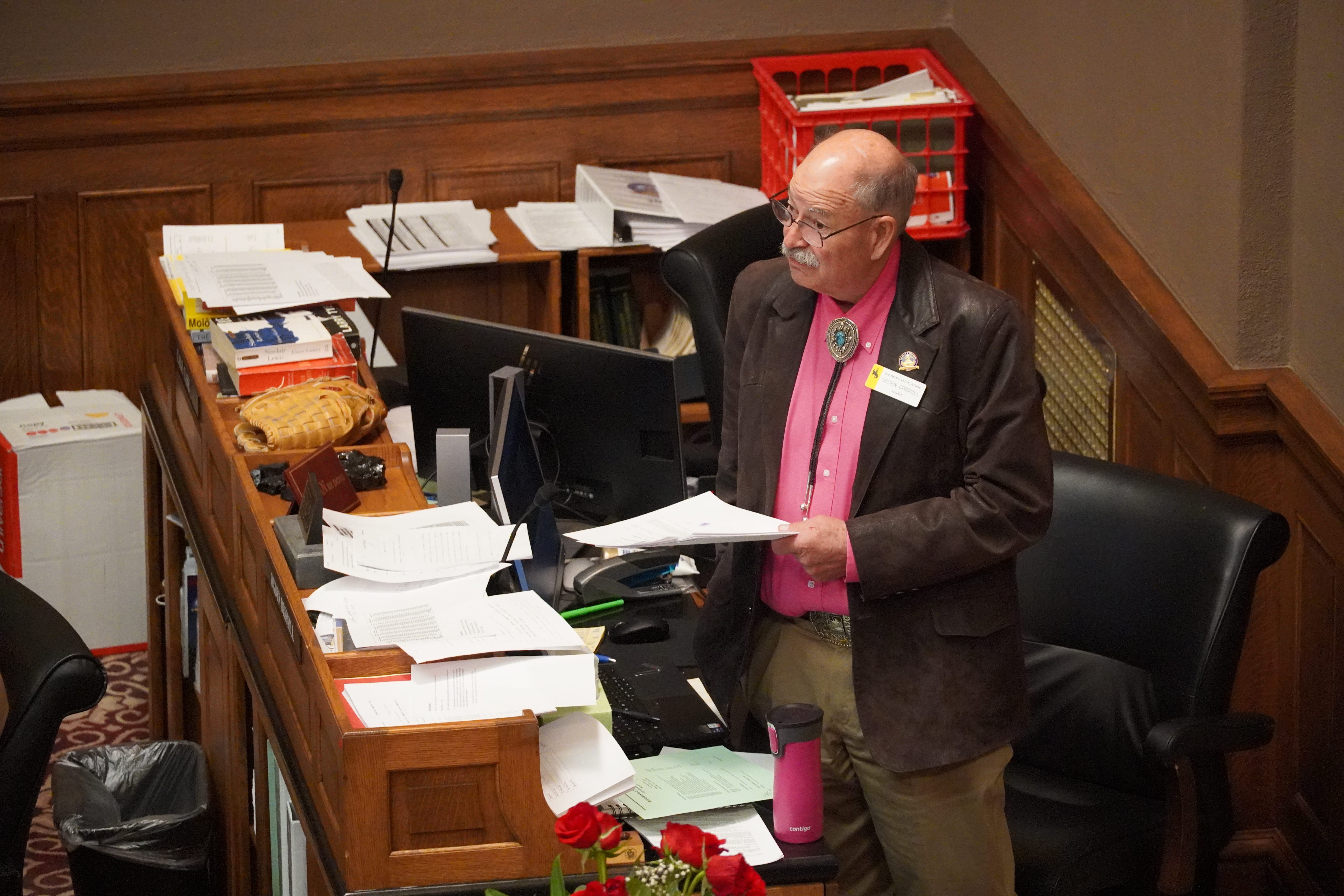
Devil Tower Sen. Ogden Driskill (SD-01), who opposed the $40 million cut when it came up in committee, answered Crum.
“They declined to decide where they wanted to do cuts. Instead, they decided to protect things they like and not deal with the others,” he said. “I asked the question: if you’ve got things you don’t like, let’s pick what to get rid of. And the committee declined to do that.”
Cheyenne Sen. Taft Love (SD-6) said Driskill’s answer made it sound “like that was kind of random and just personal preference.”
“Maybe we should focus on education that’s going to be the most employable by our industries,” he suggested.
Riverton Sen. Tim Salazar (SD-26), who supported the $40 million cut in committee, responded.
“These are very difficult decisions — and personal preference, I guess you could say that,” he said. “But it’s what you believe the priorities are.”
As in the House, some in the Senate defended the cut. Baggs Sen. Larry Hicks (SD-11) said directing the state university’s offerings was nothing new, given that it has directly funded the School of Engineering, the Tier 1 Engineering Initiative and more.
“This is just the legislature saying these are the things that drive the economy — agriculture, tourism and energy — and these are priorities for budgeting for the University of Wyoming.”
Crum also asked about decisions made regarding multiple requests from UW for matching funds to spur private fundraising. The committee endorsed requests for athletics and energy research support, but cut the requested matching funds for more general university support and programs.
“Again, I’m back to the winners and losers thing,” Crum said. “We want to help out athletic facilities, which is great. We want to help out energy resources, which is great. But we’re telling the rest of the university, we don’t want to help out you with matching funds … I’m just wondering why we did that.”
Salazar answered.
“The answer to that is very simple: It was a majority of JAC who wanted to do that,” he said, then implicitly suggested Crum bring an amendment to change it. “I have no doubt, my friend, the good senator, will correct what he thinks is an injustice.”
What happens next?
Thursday’s floor sessions kicked off the budget bill’s “committee of the whole” reading — the first time the bill is presented to a full chamber.
The budget bill’s second reading is scheduled to start on Tuesday, and that’s when lawmakers can start bringing amendments to cut more UW funding, restore what the Freedom Caucus slashed, or add stipulations to the use of state funding by adding footnotes.
From here on out, there will really be two separate budgeting processes playing out in parallel: one in the House and one in the Senate. As representatives and senators move and approve amendments to UW’s budget (and the budget of every other state agency), their bills will diverge in both size and scope.

Once both chambers have completed three readings of their budget bill, a conference committee of members from both chambers will meet to hash out the differences. If those lawmakers find a compromise between them, they will take that compromise back to their respective chambers for, ideally, a final vote.
Once the full legislature, both House and Senate, have agreed on a final budget bill, they can ship it off to the governor’s office for his signature and line-item vetoes.
It bears repeating that the governor can scratch out funds and footnotes with those line-item vetoes, but he can’t add funding back in. So whatever money the legislative chambers agree to strip from UW in their final compromised budget bill will remain.
The Freeloader Caucus appears to be filled with people who couldn't even get accepted to UWyo let alone pass a single class.